Published: 10:15 AM, 18 November 2025
Land Grabbing Thrives Under the Shadows of Power in Sreemangal
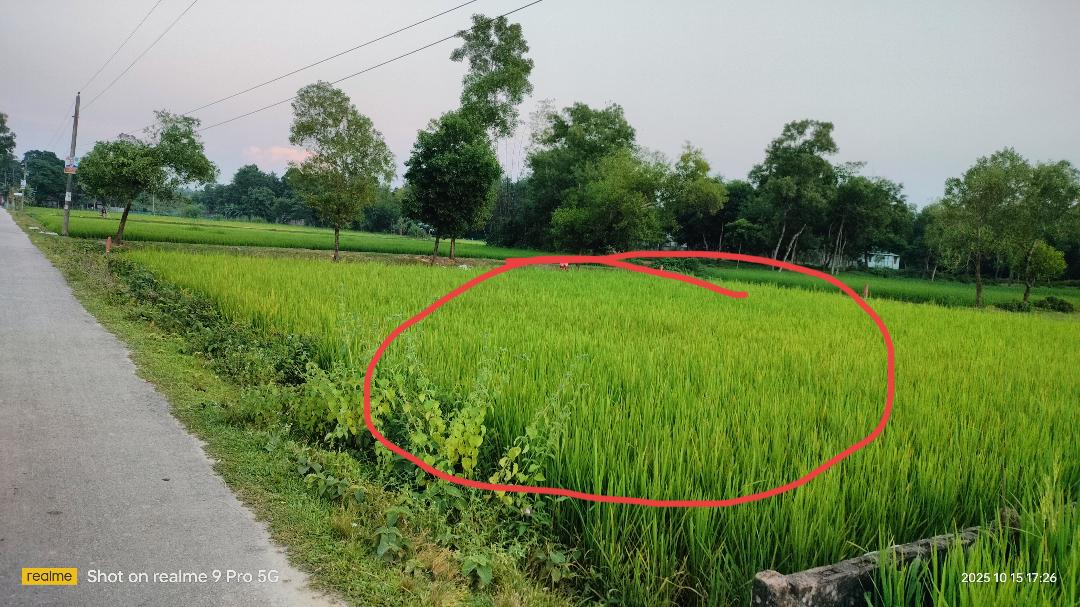
Sangram Datta: Sreemangal’s rolling hills and whispering tea gardens mask a growing crisis — one that residents discuss only in hushed voices. Long known as the Tea Capital of Bangladesh, the town was once a symbol of harmony among communities. But as land prices have spiked, so has a ruthless competition for control. In this new landscape, power often prevails over property rights, and silence becomes a survival tactic.
Locals describe the situation as a “grasping machine” — an entrenched network of brokers, strongmen, and political patrons who seize land, forge documents, and intimidate opponents into submission.
Ancestral Land, Lost in Silence
In Bhunobir village, the once-aristocratic Mahadev Datta Chowdhury family has watched hundreds of acres of ancestral property slip away. During the 1965 Indo-Pak war, the family briefly fled to India. When they returned, large sections of their land were already occupied by influential figures — a reality that persists decades later.
“They saw the war as their opportunity,” a villager recalled. “When the family crossed the border, the grabbers crossed the fence.”
Along Moulvibazar Road in Rupsapur, a similar story unfolds. A sprawling estate formerly belonging to Indra Home during the Pakistan era has reportedly been taken over by a powerful local individual. Residents whisper about commissions, manipulated records, and a seamless process that transforms illegal possession into legal paperwork.
The Educator’s Daughter Who Dared to Protest
The late educationist Kshirad Dev Chowdhury built the Radhanath Cinema Hall, once a cultural landmark of Sreemangal. After his death, an adjacent plot was seized by a shopkeeper.
When his daughter, Uttara Dev Chowdhury, protested the encroachment, she was publicly assaulted by hired thugs. Traumatized, she withdrew from public life and died a few years later. Her story remains an unspoken warning — the land still lies in dispute, vulnerable to fresh attempts at occupation.
In Noagaon, land grabbing has taken on an increasingly organized character. Minority families live under the constant threat of eviction, intimidation, or fraud.
One of the most prominent disputes involves land belonging to Rasendra Datta Chowdhury's family. For years, they have attempted to reclaim 15 decimals currently occupied by Amanullah’s sons — Md. Ankar Miah and Md. Abdul Hannan.
Family members say the occupiers possess no legal documents, yet continue to control the property with confidence and menace.
Despite valid documents and regular tax payments, the family remains unable to regain possession. Attempts at negotiation have been met with threats.
Affluent Families Not Spared
The machinery of land grabbing does not discriminate by wealth or status. Along with poor villagers and minority families, several affluent Muslim households — owners of businesses, savings, and valuable land — have become targets.
“It no longer matters who you are,” said a resident. “If your property has value, someone powerful is watching it.”
A Local Power Couple and the Politics of Fear
In another incident, locals accuse Md. Nanu Miah, husband of Union Parishad member Maleka Begum, of sending hired laborers to cut and remove soil from land of Sangram Datta, son of former local UP Chairman Rasendra Datta Chowdhury.
Family sources say they intentionally avoided filing a complaint. “These individuals have strong political backers,” a relative explained. “Even if the police detain them, their patrons will secure their release within hours. After that, life becomes unbearable for the complainant.”
Residents agree that such fear is common. “The police may take a poor person’s complaint,” said one villager, “but not necessarily their side. Real decisions here are made in power circles, not courtrooms.”
Legal Victories, Real Defeats
Former Union Parishad chairman Rasendra Datta Chowdhury experienced the same reality. He secured multiple court rulings affirming ownership of 30 decimals of land near the Jagcherra Tea Estate road.
The Moulvibazar District Court ruled in his favor. The defendants appealed — and during the appeal process, sold the land to a politically influential buyer. The Appellate Division of the High Court later upheld Chowdhury’s ownership, yet the family has been unable to take back physical possession.
“In Sreemangal,” a neighbor remarked, “the paper shows victory, but the soil shows defeat.”
A System Built on Patronage
Land grabbing in Sreemangal appears to follow a structured hierarchy: petty brokers and hired muscle at the bottom; businessmen and local leaders in the middle; and political patrons at the top.
These networks allegedly manage the sale of disputed plots through commissions and influence. Outsiders are often deceived into buying questionable land, while locals face pressure to sell cheaply or leave altogether.
Over the past decade, the hunger for land has expanded beyond private homes. Large stretches of Lawachhara Reserve Forest, tea estate peripheries, hilly khas land, and vested (enemy) properties have reportedly been taken over by influential individuals and broker groups. In many places, new resorts, orchards, lemon gardens, and even small tea estates have emerged.
Environmentalists warn that such encroachments threaten ecological stability. “When reserve forest becomes private property,” one activist said, “it’s not just land we lose — it’s our future.”
In neighborhoods like Dulipara, Malipara, Namashudra Para, and Pal Para, many Hindu families have already migrated. Those who remain say they live under a silent, persistent pressure.
Patterns Revealed
Accounts from eyewitnesses, official records, and local testimonies reveal a system that is both institutionalized and protected. Forged documents, falsified surveys, and administrative silence continue to enable the process.
Experts recommend:
A transparent land survey with public verification
Stronger legal protection for vulnerable landowners
Removing political interference from local administration and policing
Prosecution of brokers, middlemen, and political patrons involved in land fraud
Without such reforms, they warn, dispossession may soon become a normalized part of rural life.
The Human Cost
For families long rooted in the region, the struggle is no longer just about reclaiming land — it is about reclaiming dignity. Members of Rasendra Datta Chowdhury family say that despite generations of public service, they now feel unable to walk freely on land that once belonged to their ancestors.
“We don’t want conflict,” said an elderly villager. “We only want to live without fear.”
Justice on Paper, Fear on the Ground
Across Bhunobir, Rupsapur, and Noagaon, one pattern remains constant: the powerful advance, while the powerless retreat.
Court orders gather dust. Police action, when it occurs, is temporary. Behind every judgment lies another loss — of courage, faith, or home.
“The law is with us,” a villager said softly, “but the ground isn’t.”
Unless the administration intervenes with transparency, protection, and true neutrality, Sreemangal’s tea-scented hills will continue to conceal a bitter truth:
For many residents, the land beneath their feet no longer feels like their own.