Published: 09:27 AM, 23 November 2025
Guardians of the Ancestral Year
Sangram Datta:
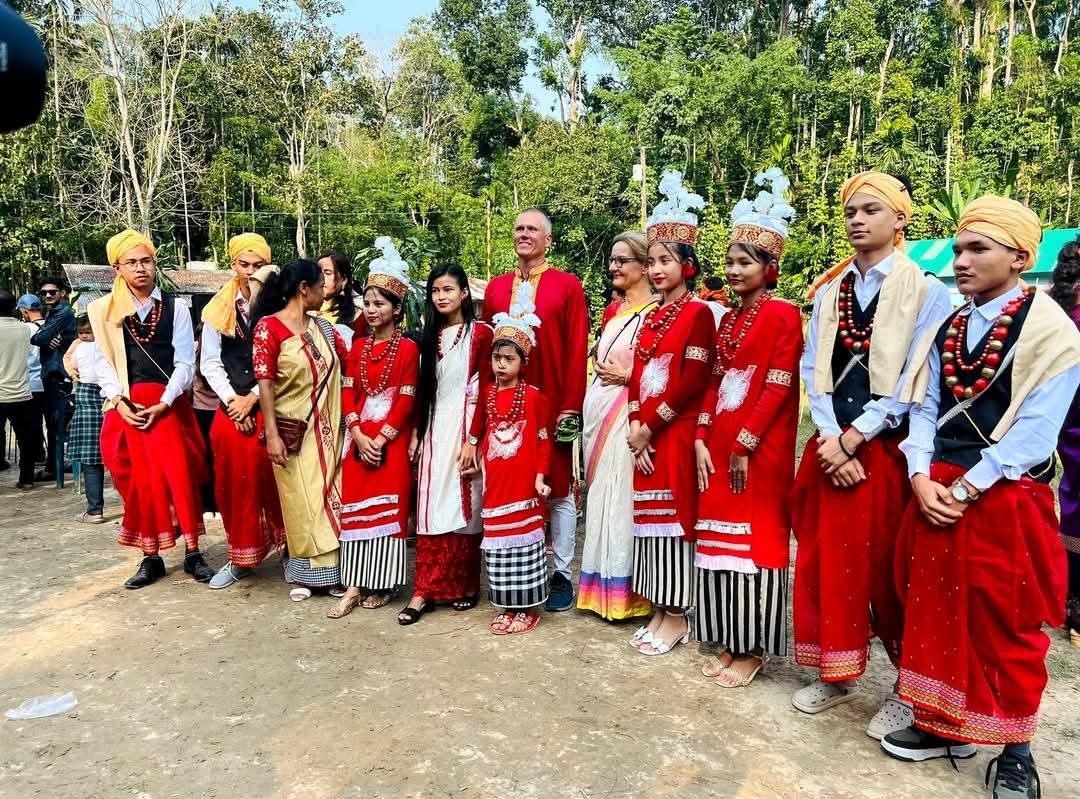
The morning mist hung low over Magurchhara Khasi Punji on 22 November 2025, weaving through the betel-leaf gardens like a silent storyteller. The hills, still half-asleep, slowly awakened to the beat of drums, the rustle of traditional shawls, and the gathering footsteps of families arriving from faraway punjis.
It was the day the Khasi community of Bangladesh would once again embrace the spirit of a festival older than borders and deeper than memory—
Seng Kut Snem, the ancestral year-ending celebration that binds the Khasi people to their origin, faith, and identity.
This year, the festival unfolded in Magurchhara in all its color and cultural power, but its roots reach back across time, into the hills of Meghalaya where the story first began.
Where the Story Began: 1899 and the Birth of a Revival
The origin of Seng Kut Snem is a tale of resilience.
In the late 1800s, the Khasi Hills—now in Meghalaya—were facing sweeping change under British rule. Western education, new religious influences, and rapid social shifts were transforming traditional life. The ancient Khasi faith, Niam Khasi, risked fading under the weight of this transformation.
In response, a group of farsighted elders gathered on 23 November 1899 to form Seng Khasi, a community organization dedicated to preserving the Khasi indigenous religion, culture, and social values.
That founding day became more than a date—it became a declaration.
And from it emerged Seng Kut Snem:
Seng — the organization
Kut — to close or conclude
Snem — year
Meaning “the closing of the Seng Khasi year”—a symbolic reaffirmation of Khasi cultural roots and moral teachings such as:
Tip Briew Tip Blei — Know man, know God
Kamai ïa ka Hok — Earn righteousness
More than a festival, it evolved into an annual reminder of who the Khasis are and what they stand for.
Crossing Borders: A Heritage Shared by Two Lands
Over time, the spirit of Seng Kut Snem traveled across the border, carried by Khasi families who settled in the highlands of Moulvibazar, Jaflong, Kanaighat, Kulaura, and Baralekha of Sylhet division in present-day Bangladesh.
Here, in bamboo-built punjis surrounded by rolling green hills, traditions survived through storytelling, rituals, and community gatherings. While the grand celebrations take place in Shillong every year, the Khasi people of Sylhet have kept the flame alive in their own way—small circles of dance, songs echoing through the hills, and gatherings that keep the heritage breathing.
This year, that heritage blossomed in full bloom at Magurchhara Khasi Punji.
The Festival Unfolds: A Day of Color, Song, and Memory
By 9 a.m., the punji was alive. Children ran barefoot along the paths. Women adjusted their colorful jainsem, woven with family motifs. Elderly men, carrying memories older than the young ones could imagine, arrived with quiet pride.
From nearly 70 punjis across Sylhet, people of all ages came—walking, riding, carrying children, carrying history.
The daylong festival offered a tapestry of tradition:
Cultural discussions on Khasi heritage, its origins, and the meaning of Seng Kut Snem
A color fair, vibrant with handmade crafts and traditional ornaments
Performances of the iconic Jing Shad dance, where circles of dancers moved like ripples in a timeless river
Folk songs sung to the rhythm of traditional drums and bamboo pipes
Self-help games that echoed childhood memories of old Khasi villages
The cheerful Lehkai competition, rooted in ancestral pastimes
A lively lucky coupon draw, adding modern excitement to ancient celebration
With every performance, the punji seemed to breathe with ancestral memory. Laughter mingled with music, and the beat of drums carried across the hills.
The Heart Behind the Celebration
The event was organized by the Khasi Social Council (KSC), whose leaders described Seng Kut Snem not just as a festival, but a declaration of identity, cultural unity, and ancestral continuity.
For a community spread across two nations, the festival serves as a bridge connecting past and present, hills and plains, memory and celebration.
A Living Narrative
As the sun slipped behind the rolling green of Magurchhara, the last dance circle slowly dissolved, and the drums fell silent. Families prepared to return to their punjis—tired yet fulfilled, carrying stories to pass on to children who would one day inherit this legacy.
Seng Kut Snem is not merely a date on the calendar.
It is the quiet promise of a people who refuse to forget.
It is the rhythm of a heritage that survived colonial rule, migration, and modern change.
It is the ancestral heartbeat that still echoes across Meghalaya and Sylhet.
In Magurchhara, on this November day of 2025, that heartbeat was loud and clear—
a celebration, a memory, a reminder.
The year may end, but the story lives on.