Remembering
Published: 06:04 AM, 04 December 2025
A Life Lit by Principle: The Enduring Legacy of Dr. Md. Abdul Ali
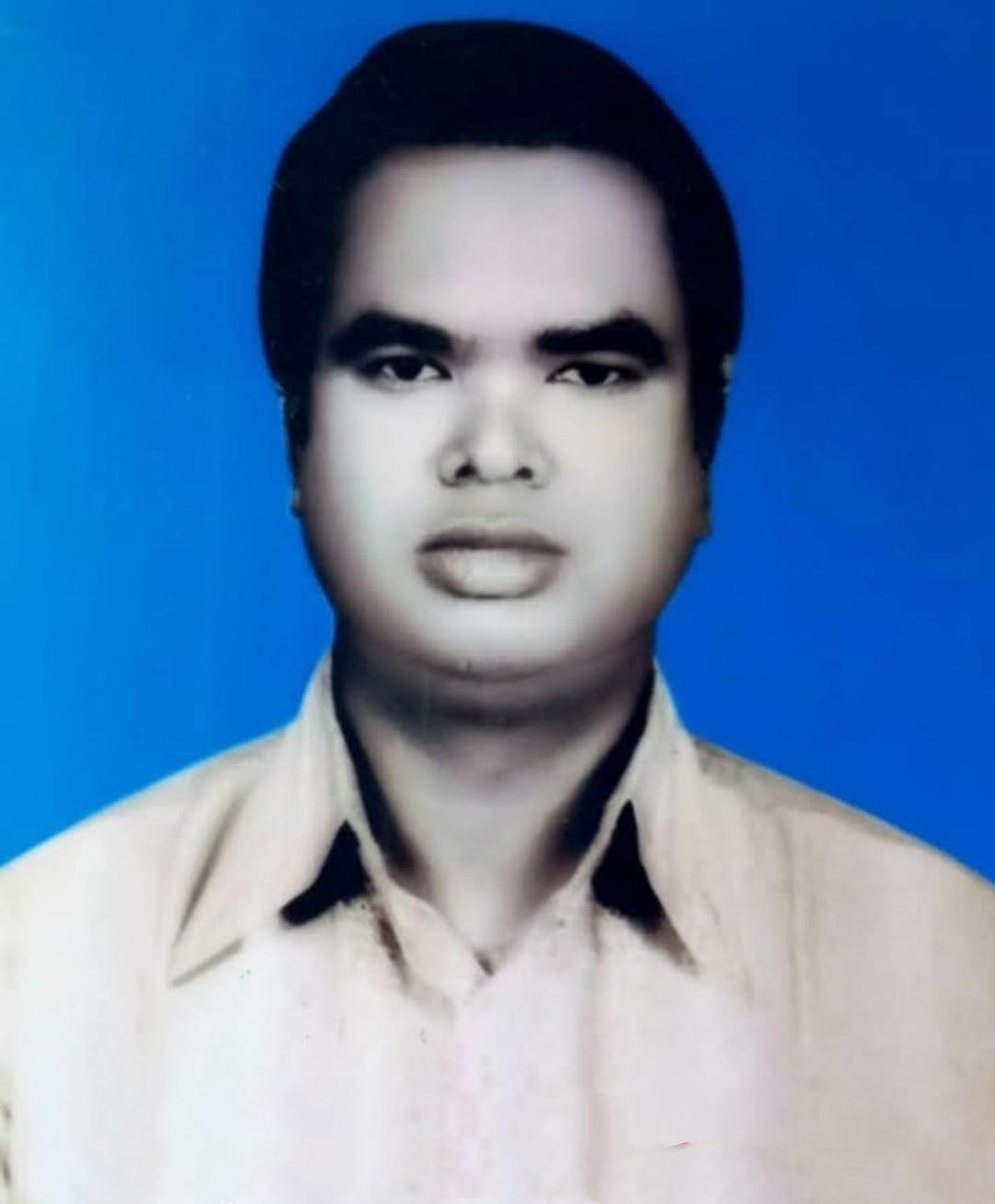
Sangram Datta: To live for others—so often spoken, so rarely lived. Yet in the small, rain-washed town of Sreemangal, a man once walked whose everyday life quietly defined that ideal. Dr. Md. Abdul Ali—physician, political activist, freedom-war organizer, and moral compass—died more than four decades ago, yet his name still stirs an uncommon reverence. For those who knew him, he was not simply a doctor; he was a presence. A figure who, through the force of decency alone, shaped an era.
Roots in a Changing Bengal
He was born on April 11, 1936, in the Shreemangal Basti of the old South Sylhet subdivision—today the Lalbagh residential neighborhood of Moulvibazar district. The eldest of three children of Haji Baharam Ali and Gulshanara Begum, young Abdul Ali grew up in a household where responsibility was not a lesson but a lived environment. From early childhood he carried a seriousness beyond his age, a kind of moral clarity that would guide every chapter of his life.
He passed his matriculation from Victoria High School in 1952. That same year, with Bengali identity under threat, history called on him.
A Teenager in the Language Movement
The tectonic shifts of 1952—not just a movement, but a moment when Bengali identity crystallized—left an indelible mark on the young Ali. When the state refused to recognize Bengali as a national language, he joined the swelling crowds of protesters.
After the killings of Salam, Barkat and Rafique on February 21, a massive rally was held at the Sreemangal municipality grounds. There, amid the tension and grief, the teenage Abdul Ali stood before the crowd and delivered an impassioned speech demanding state recognition for Bengali. It was his first public address—and the community never forgot it.
He had taken his place among the town’s key student activists: Jogendra Dutta, Rasendra Dutta, Biraj Kusum Chowdhury Chuni, Akhil Chandra Dhar, Shyamal Sengupta, Achyut Kumar Dev, Dr. Fazlul Haque, Md. Mosaddar Ali and Syed Mohibur Rahman Chowdhury. Together, they formed the nucleus of a local resistance that would define Sreemangal’s political culture.
Medicine as a Mission
After the movement settled, studies resumed. Ali enrolled at the Comilla Medical Institute to pursue his LMF degree, completing it in 1959. Returning to Sreemangal, he established himself not as a businessman but as a physician of conscience.
He exempted the poor from fees. He bought medicine for patients who could not afford it. The fees he collected from the wealthy went into the treatment of the vulnerable. It was a model of healthcare that belonged more to moral philosophy than to economics.
And Sreemangal responded. People did not simply come to him for treatment—they came because they trusted him.
Growing Political Fire
The young doctor who once protested for language rights soon found himself drawn into broader movements. The 1960s were a decade of upheaval, and he was present in each tide: the anti-Ayub protests, the Six-Point Movement, the mass uprising.
In 1965, he joined the Combined Opposition Party under Fatema Jinnah’s leadership. He worked closely with local organizers during the Pakistan presidential campaign, advocating for democracy and civil rights.
Then came 1969. Along with Mohammad Ilyas—founding general secretary of the Students’ Union and a key communist organizer—and Md. Altafur Rahman Chowdhury, Dr. Ali established the Awami League’s Sreemangal Thana Committee. It was a foundational act. The structure he helped create would later guide the region through the Liberation War.
In April 1970, when NAP leader Rasendra Dutta, Shahjahan Mia, student leader M.A. Rahim and S.A. Mujib were arrested in the “Joy Bangla” case, Dr. Ali moved swiftly. He helped mobilize mass protests demanding their release, and the pressure worked: the authorities backed down.
A Visit from Bangabandhu
It was also in 1970 that a historic encounter occurred. Bangabandhu Sheikh Mujibur Rahman, accompanied by Abdul Samad Azad, Dewan Farid Gazi and Comdt. Manik Chowdhury, visited Dr. Ali’s home. With the general election approaching, Bangabandhu was restructuring the party in Sylhet.
Impressed by Dr. Ali’s popularity and his integrity, he assured him of the Awami League nomination—first in 1970, and again in 1973. Yet the nomination never materialized for reasons that remain unknown. Those close to Dr. Ali say he accepted this quietly, without resentment.
On the Eve of War
March 1971 changed everything. When Yahya Khan abruptly postponed the National Assembly session on March 1, Sreemangal erupted in protest. Dr. Ali stood at the front lines once more.
On March 27, Gen. M.A.G. Osmani and Brigadier Pandey reached the Sreemangal municipality building, declaring it the control room of the war effort. From that moment, Dr. Ali played a guiding role in local resistance.
On March 28, a five-member Sreemangal Struggle Committee was formed. Dr. Ali was among them—a pivotal leadership body coordinating fighters, logistics and medical support.
On March 31, alongside Col. Abdur Rab and Md. Ismail Hossain, he helped mobilize EPR soldiers into active resistance.
But as Pakistani forces advanced and the situation deteriorated, he crossed the border into India. There he spent the nine months of war providing medical care and supporting training operations at Comdt. Manik Chowdhury’s camp. He did not carry a weapon, but he saved lives—and sustained those who did.
The Years After Liberation
When the nation emerged from war, Dr. Ali continued on his chosen path. In 1972, he supported the labor movement of the Bangladesh Tea Workers’ Union, advocating for better rights and conditions.
In 1973, responding to public demand, he ran as an independent candidate with the “Watch” symbol. He lost by a narrow margin—a close contest that revealed both his popularity and his principled distance from political maneuvering.
Later he joined the National Janata Party, founded by Gen. Osmani, serving as thana president and a member of the central committee until his death.
Family and Personal Life
On February 23, 1964, Dr. Ali married Akhlatun Nahar, second daughter of the late Jahir Uddin of Milonpur village, Kagaubla Union. Together they built a family of five children respectively Shamiun Nahar, Jamilun Nahar,
Amena Begum, Dr. Abeda Begum Poly and only one son Abul Fazl Md. Abdul Hai Dawn.
The family recalls a father who balanced political activism with a rare tenderness—a man who returned home late but never without compassion.
A Sudden, Shattering Loss
On December 1, 1981, he traveled to the Aliyachhra Pan Punji to see a patient. On his way back, near the Satgaon Tea Garden on the Dhaka–Sylhet Highway, his vehicle collided with another. The injuries were severe.
He was first taken to Sylhet MAG Osmani Medical College Hospital. When his condition worsened, he was airlifted to Pongu Hospital in Dhaka. On December 4, at 4 p.m., Dr. Md. Abdul Ali breathed his last.
His death left a void that has never truly closed.
A Light That Does Not Dim
In an age increasingly defined by cynicism—by transactional politics, profit-driven healthcare and moral shortcuts—the life of Dr. Md. Abdul Ali stands as a quiet but powerful rebuke.
He was not wealthy. He held no high office. He sought no fame.
Yet he lived with a rare consistency: principle, service, sacrifice.
He healed the poor without charge.
He fought for language, for democracy, for independence.
He organized without ego, served without expectation and spoke truth without fear.
Today, his legacy is not merely memory—it is instruction. In a society grappling with its own crises of ethics and trust, his life offers something deeply needed: the possibility that decency, lived fully, can shape history.