Published: 07:57 AM, 09 March 2026
A Life Shaped by Politics, Journalism and Struggle
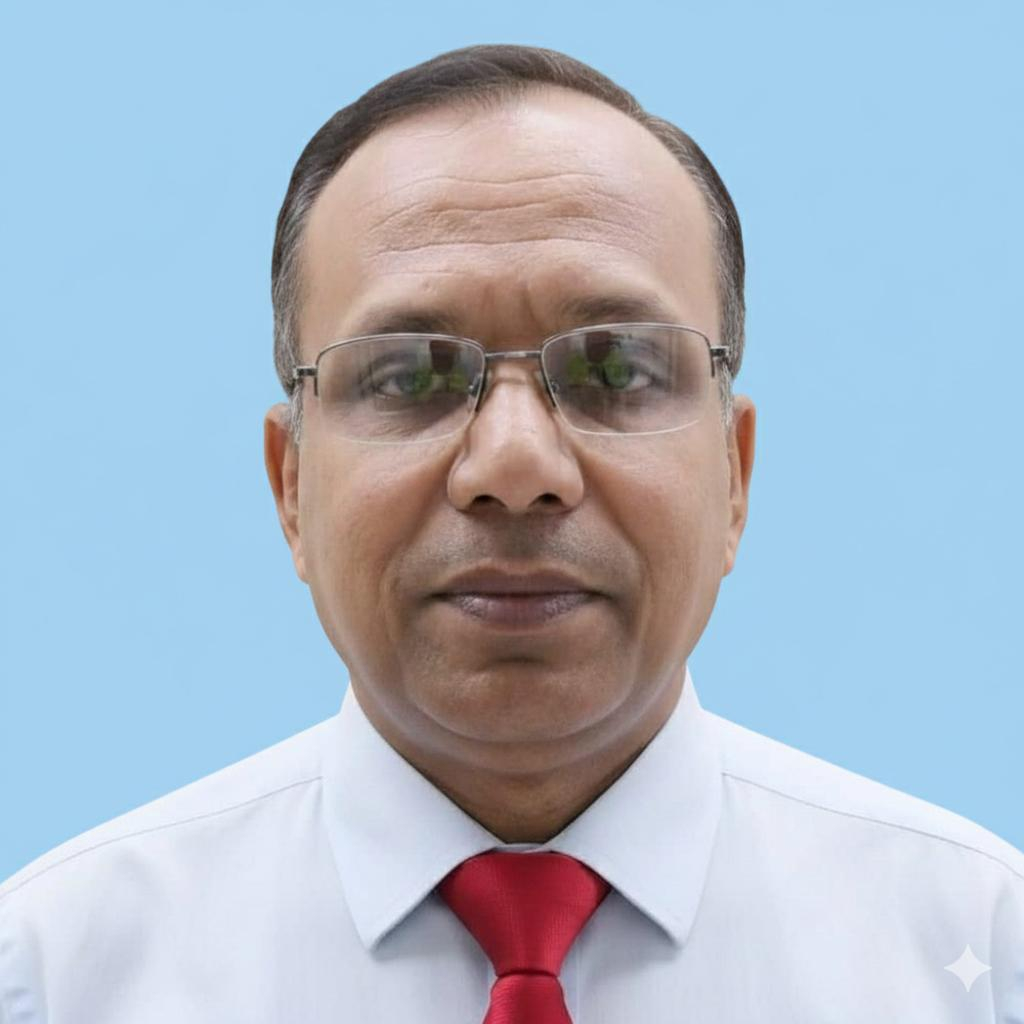
Sangram Datta: From my childhood, I grew up observing politics closely through the life and activities of my father named Rasendra Datta Chowdhury. His political journey itself spanned an extraordinary period in the history of the subcontinent. He began his political involvement during the historic Language Movement of 1952 and remained politically active until he suffered a stroke in 2020. Over those many decades, he faced imprisonment several times both during the Pakistan period and after the independence of Bangladesh because of his political beliefs and activities.
My father was an activist of the Language Movement and later played an important role in organizing support for the Liberation War of 1971. During that critical period, he worked in favour of Bangladesh's independence and maintained effective communication and cooperation with Indian authorities who supported the liberation struggle.
In recognition of his contribution and his efforts to strengthen relations with India during the war, the Government of India later provided him with an honorary certificate.
However, despite his long political struggle and involvement in the liberation movement, he and many other genuine political activists who worked for the independence of the country were later deprived of official recognition as freedom fighters. This happened largely due to parochial attitudes and political influence within the Sreemangal Upazila Freedom Fighter Scrutiny Committee, which was chaired at the time by the then Agriculture Minister and Member of Parliament, Vice Principal Abdus Shaheed, along with several other committee members.
Seeking justice for my father, I personally met the then Minister for Liberation War Affairs, A. K. M. Mozammel Haque, on 19 May 2024.
I requested him to ensure a proper hearing of the appeal submitted by my octogenarian father regarding his recognition as a freedom fighter. Unfortunately, the minister informed me that there was nothing he could do regarding the matter. In this situation, I had no alternative but to file a writ petition with the High Court. The case is currently awaiting judgment. The process has required me to travel frequently and face many difficulties for various reasons.
My early memories of political struggle also include the turbulent period following the assassination of Bangabandhu Sheikh Mujibur Rahman in 1975. During that time, the police surrounded our home at the Purbasha Residential Area of Sreemangal Thana in Moulvibazar district. My father was arrested and imprisoned as a political prisoner.
In 1977, he was released after his party leader, Professor Muzaffar Ahmed, filed a writ petition in the High Court through his secretary or political assistant.
During my father's imprisonment, our beloved mother Indira Datta Chowdhury ( Shipra) carried the heavy responsibility of maintaining the family. She struggled immensely to raise us and keep the household running. Through sewing and other small efforts she worked tirelessly to support the family during those difficult years.
Her determination and sacrifice ensured that we could continue our lives despite the hardship and uncertainty. Her strength in those years remains one of the most inspiring chapters of our family history.
After being released from prison, my father resumed his political activities. Our modest mud built house gradually became a gathering place for political leaders, activists and supporters. I observed those meetings from my early age, listening to discussions about politics, society, and the future of the country. This was during the period when General Ziaur Rahman was leading the country.
Reading newspapers became a habit for me from a very early age. My father worked as a journalist for the daily newspaper Sangbad and received a complimentary copy every day.
I eagerly read the newspaper and gradually developed a deep interest in journalism.
Later, when President Hussain Muhammad Ershad reopened political activities and announced local government elections, local residents and political supporters encouraged my father to contest the election for Chairman of the Sreemangal Union Parishad in 1983. Responding to public support, he entered the election and won by a large margin.
My father also owned a small shop on Station Road in Sreemangal town where he sold books and other essential items. The shop gradually became more than a business place. It served as his informal political and journalistic office. People from different professions and social backgrounds regularly gathered there to discuss public issues, politics, and community matters. I watched these conversations carefully and learned from them.
In those days, my father wrote his reports by hand and sent them to the newspaper office by post. When urgent news occurred, he used telegrams to send messages quickly to the editorial office. Observing his work closely, I learned how he structured his reports and presented facts. From his style and discipline I gradually developed my own interest and ability in writing.
Eventually I entered the profession of journalism. However, I soon discovered that the profession also involved conflict and risk. A section of sycophant journalists began spreading fabricated stories about me and my father with the intention of suppressing and harassing us. At one stage they even attempted to influence the highest local government official to have me imprisoned. Their attempt failed because my father and several respected senior journalists intervened wisely and defended the truth.
At different times, certain influential political leaders and business tycoons allegedly encouraged hired attackers who harassed and assaulted me and even attempted to take my life. These experiences revealed the serious challenges faced by journalists who attempt to report independently.
My professional writing career began with the Bengali newspaper The Daily Khabar ( a national vernacular daily), where I wrote for several years during the regime of General Hussain Mohammad Ershad.
Later, I contributed to well known publications such as Ajker Kagoj, Janakantha, and the popular weekly magazine Chitra Bangla.
I also occasionally wrote features and articles for the Daily Sangbad.
In the meantime, I began writing for The Independent, a national English language daily newspaper in Bangladesh since beginning in 1995. I worked there for several years. However, increasing pressure from different vested quarters gradually made it difficult for me to continue working freely in journalism. Eventually, I decided to leave the profession and pursue employment in the private sector.
After leaving journalism, I worked for many years in several private business organisations, particularly within the textile and garment industries.
During this period I continued to develop my academic and professional knowledge. I completed a specialization in Journalism from Michigan State University through Coursera. I also completed specialization programs in Human Resources Management, Strategic Leadership and Management from the University of Minnesota and the University of Illinois respectively through Coursera.
In November 2020, my beloved mother passed away. Only one month later my father suffered a stroke. Since then I have devoted most of my time to caring for my elderly father, who is now in his eighties. Providing him with support and nursing care has become my primary responsibility.
In my spare time I still try to write features, articles, and opinion pieces for newspapers. Yet presenting the real situation of society has become increasingly difficult. Powerful groups often camouflage reality, create divisions among people, and engage in parochial political interests.
One of the most serious problems in many communities is land related conflict.
Influential groups frequently attempt to seize land belonging to poor and vulnerable people. In many cases victims are harassed through false legal cases and even sent to jail in order to force them to abandon their property.
Although many journalists are working in the locality and country today, a significant number hesitate to report these realities. Some maintain close relations with powerful elites or wealthy individuals in order to secure personal benefits. As a result, it becomes extremely difficult for truthful journalism to reveal the real conditions of society and protect the rights of ordinary people.
Despite these challenges, I continue to believe that responsible journalism remains essential for justice, transparency, and social accountability.