Published: 11:26 AM, 02 April 2026
Stitching Global Excellence: What Urmi Group’s Milestone Says About Bangladesh’s RMG Future
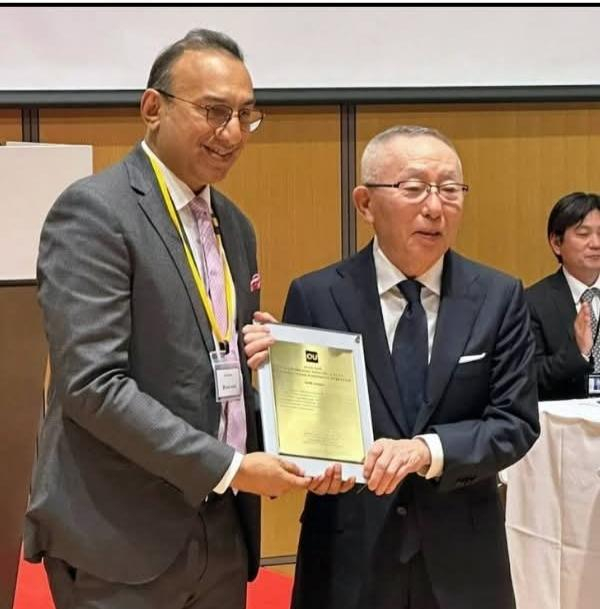
Sangram Datta: At a time when global supply chains are being reshaped by sustainability demands and shifting economic realities, a Bangladeshi manufacturer has secured a place on the global stage. UHM Limited, the flagship unit of Urmi Group, has been awarded the prestigious “GU Excellent Factory Award 2026” by Fast Retailing Co., Ltd., the parent company of Uniqlo.
The recognition, presented by Uniqlo CEO Mr. Tadashi Yanai at the Fast Retailing Factory Conference in Tokyo on March 25, is more than a corporate accolade. It marks a significant moment for Bangladesh’s ready-made garments (RMG) sector. UHM Limited stands among only four factories worldwide to receive this honor—and notably, it is the sole representative from Bangladesh.
This achievement reflects a broader transformation within the country’s apparel industry. Once primarily known for low-cost manufacturing, Bangladesh is increasingly positioning itself as a hub for quality, compliance, and innovation. UHM Limited’s recognition highlights key strengths that global brands now prioritize: production flexibility, high workplace standards, and alignment with sustainability goals.
While such milestones deserve recognition, they also prompt a deeper assessment of the sector’s current position and future direction.
The RMG and textile industry remains the backbone of Bangladesh’s economy, contributing significantly to export earnings and generating vital foreign currency. It employs millions and plays a central role in economic stability. However, the industry’s future competitiveness will depend not just on volume, but on value addition.
Sustainability has become both a challenge and an opportunity. Bangladesh is already home to some of the world’s top-rated green garment factories. Several have achieved the highest levels of international certification, and at least 280 factories across the country are now operating under green standards. This reflects a meaningful shift toward environmentally responsible production practices.
This transition is critical. Global brands are under increasing pressure to ensure ethical sourcing and reduce environmental impact. Manufacturers that meet these expectations are more likely to secure long-term partnerships. UHM Limited’s recognition demonstrates that Bangladeshi factories are capable of meeting—and even exceeding—these global benchmarks.
However, challenges remain. Political stability is a key factor in sustaining growth. Both investors and international buyers seek consistency and predictability. A stable environment would encourage further investment in technology, workforce development, and infrastructure.
Market diversification is another pressing priority. While traditional markets in North America and Europe remain important, expanding into new regions will be essential for long-term growth. Entrepreneurs in the sector are actively exploring new export destinations, and this effort must be supported by effective government policies and trade initiatives.
The role of the government is crucial in this context. By improving infrastructure, streamlining regulations, and ensuring energy security, authorities can help accelerate the sector’s advancement. Strong collaboration between the public and private sectors will be necessary to sustain momentum.
Urmi Group’s achievement is not just an isolated success—it represents the potential of an entire industry. It demonstrates what can be accomplished when local enterprises align with global standards and expectations.
The key question now is whether this success can be replicated on a larger scale. Can more factories rise to this level of excellence? Can the industry continue moving up the value chain? And can Bangladesh establish itself not only as a manufacturing hub but as a global leader in sustainable production?
The answers will define the future of the country’s most important export sector.
For now, one message is clear: Bangladesh is no longer just participating in the global apparel industry—it is increasingly helping to shape its standards.