Published: 07:26 AM, 06 April 2026
Srimangal 1970: Arrests, Resistance, and the Rise of a Local Movement for Liberation
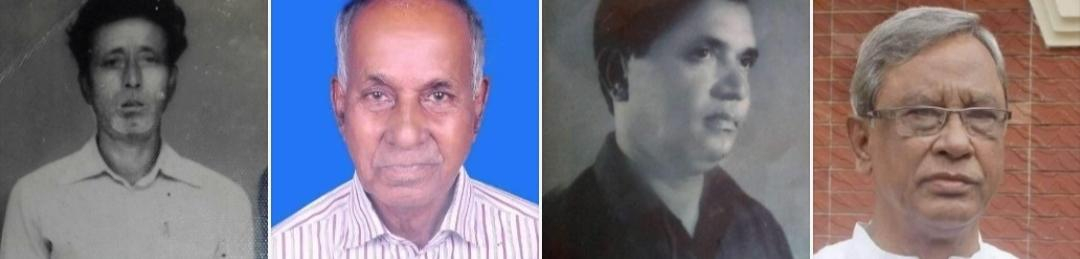
Sangram Datta: April 6, 1970—an important day during a period of political turbulence in then Pakistan. On this day, under allegations framed as a “conspiracy to break Pakistan,” commonly linked to the “Joy Bangla” case, four influential political figures were arrested by authorities at Srimangal police station in the Moulvibazar subdivision. They were subsequently transferred to the Moulvibazar sub-divisional jail, sparking immediate public outrage and setting in motion a wave of mass protests.
The arrested individuals were NAP leader Rasendra Datta Chowdhury and Mohammad Shahjahan Mia, along with Student League leaders M A Rahim and S A Mujib. The case against them was filed under Military Law, LR Clause-8.
In the late 1960s, these leaders played a central role in organizing political consciousness in Srimangal. Through their efforts in mobilizing peasants, workers, and students, they helped foster widespread opposition to Pakistani rule. Their activities drew continuous scrutiny from the administration, which viewed their growing influence with concern.
Following their arrest, a previously scheduled public meeting of the National Awami Party ( Muzaffar ) at the Srimangal Municipal ground quickly transformed into a protest gathering. The rally was addressed by then NAP leader Begum Motia Chowdhury and central leader Ahmedul Kabir, whose speeches energized the crowd and intensified the movement.
Thousands of activists from the Student Union, Student League, NAP, and the Awami League, along with people from diverse backgrounds, took to the streets in protest. Faced with sustained public pressure, the authorities were eventually compelled to release the detainees.
In the years that followed, the four leaders, along with their associates, remained actively engaged in the broader struggle that culminated in the 1971 Liberation War. Even after independence, they continued to participate in democratic movements and maintained an influence in local social and political spheres.
Rasendra Datta Chowdhury, born on April 12, 1940, in Noagaon village of Srimangal, was deeply involved in key movements of the time, including the Language Movement, the 1962 Education Movement, the 1963 Balishira Hill Movement, the Six-Point Movement of 1966, and the Mass Uprising of 1969. During the Liberation War in 1971, he worked as an organizer in the region. As Pakistani forces advanced into Srimangal, he crossed the border into India and took refuge in a camp, where he served as a joint secretary and contributed to efforts aimed at building international support for Bangladesh’s independence. He also assisted in camp administration, including maintaining order and coordination, for which he received an honorary certificate from the Government of India. After independence, he continued his involvement in journalism and local politics. He is currently the only surviving accused in the 1970 case.
Mohammad Shahjahan Mia, born in 1938 in Lamua village under Kalapur Union, had limited formal education but remained actively engaged in major political movements from the Language Movement through the Liberation War. He passed away on February 8, 1992.
M A Rahim, born in 1953, played a leadership role in forming the Srimangal Thana committee of the Student League in 1968. After his arrest in the 1970 case and subsequent release, he traveled to India for training and later contributed as an organizer during the Liberation War. He went on to serve twice as chairman of the municipality and passed away on April 19, 2023.
S A Mujib was politically active in the Awami League from his student years and also participated as an organizer in the Liberation War. He passed away on December 27, 2007. However, concerns have been raised that their contributions did not receive adequate state recognition after independence.
In 2014, following a government initiative, online applications were submitted on behalf of three of the leaders seeking recognition as freedom fighters. However, allegations emerged regarding the conduct of the local Freedom Fighters Verification and Selection Committee, chaired by former Agriculture Minister and Member of Parliament Abdus Shaheed, along with other members, with accusations of political bias influencing the evaluation process. The committee recorded remarks stating that no verifiable evidence of freedom fighter status was found and forwarded the applications to the National Freedom Fighters Council (Jamuka). As a result, the applicants were not granted official recognition.
In response, Rasendra Datta Chowdhury filed a writ petition in the High Court after submitting an appeal to Jamuka’s central office without receiving a hearing. Meanwhile, due to procedural complexities and lack of familiarity with the process, the families of Mohammad Shahjahan Mia and M A Rahim did not pursue appeals. In the case of S A Mujib, no application was submitted, as his family was reportedly unaware of the government’s call.
Historians view the Srimangal incident as more than a legal episode. It stands as a significant chapter in the broader awakening of independence consciousness in East Pakistan. The locally organized resistance and sustained public mobilization contributed to strengthening the national liberation movement, which ultimately led to the independence of Bangladesh in 1971.