Published: 07:35 PM, 06 April 2026
Venomous Snake Rescued from Ventilator in Sreemangal: Public Alarm Grows as Deforestation Signals Deeper Ecological Crisis
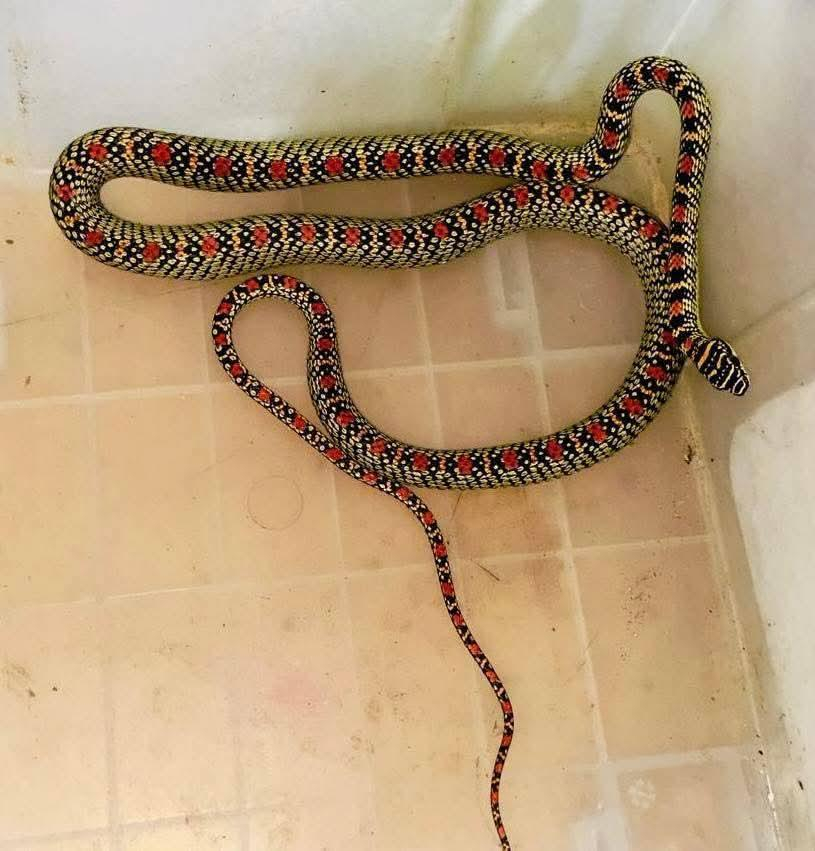
Sangram Datta: A venomous Kalnagini snake was rescued from a broken ventilator in a third-floor apartment at the staff quarters of the Sreemangal Upazila Health Complex in Moulvibazar district. The incident has raised immediate safety concerns among residents while also drawing attention to a broader environmental issue linked to deforestation and habitat loss in the region.
The snake was first spotted around 8:00 p.m. on Monday (April 6) inside the residence of Dr. Shraban Pal. Family members noticed the reptile near the ventilator, which led to panic and prompted them to quickly leave the apartment.
After being informed, Upazila Health Officer Dr. Sintia Tasnim contacted SITESH Ranjan Dev, chairman of the Bangladesh Wildlife Service Foundation. Following the alert, foundation director Swapan Dev Sojal and environmental activist Rajdeep Dev Dip arrived at the location. They identified the snake hiding inside the ventilator opening.
After approximately thirty minutes of careful handling, the team successfully captured the snake without causing it harm. The reptile was subsequently handed over to the Sreemangal Forest Department for release into a suitable natural habitat.
A Growing Environmental Concern Behind the Incident
While the immediate situation caused alarm among healthcare workers living in the staff quarters, environmental observers say the event reflects a larger and ongoing ecological imbalance in the Sreemangal–Kamalganj region.
Sreemangal, widely known as the tea capital of Bangladesh, is surrounded by forests, hills, wetlands, and tea gardens that together form a rich and diverse ecosystem. However, over recent decades, unregulated deforestation, encroachment on forest land, and unplanned construction have significantly disrupted this balance.
Reports suggest that substantial portions of protected forest areas have been occupied by influential groups, leading to the establishment of settlements, resorts, and commercial structures. As natural habitats shrink, wildlife is increasingly forced out of its environment.
Increasing Encounters Between Humans and Wildlife.
According to the Bangladesh Wildlife Service Foundation, the organization has rescued more than a thousand wild animals—including snakes, pythons, birds, and other species—from various parts of the country over the past two decades. These animals are then handed over to the Forest Department for release.
This pattern indicates that wildlife entering human settlements is no longer a rare occurrence but a growing trend. Experts attribute this to habitat destruction and the loss of natural food sources, which compel animals to move into populated areas in search of shelter and sustenance. This shift increases risks for both humans and animals.
Concerns Over Forest Protection and Enforcement.
Local residents have expressed concern that deforestation over the past several decades has benefited certain powerful groups, while effective measures to protect forest land have remained limited. Although such issues have been reported in the media over time, enforcement actions are often seen as insufficient.
There are also concerns that political influence can hinder strict action against illegal encroachment, weakening conservation efforts and further endangering biodiversity in the region.
A Warning Sign for the Future
The presence of a venomous snake inside a ventilator in a residential building serves as a stark reminder of the consequences of environmental degradation. When natural ecosystems are disrupted, the effects can directly impact human spaces.
Experts caution that without urgent steps to curb deforestation, remove illegal encroachments, and restore wildlife habitats, such incidents are likely to become more frequent. The Sreemangal case highlights not only an isolated rescue operation but also a broader need to reassess environmental management, development practices, and collective responsibility toward preserving ecological balance.